
Curriculum for Wales Summary
Pilot Implementation of PKC Cymru
Introduction
At Neyland Community Primary School, our curriculum is shaped by the Welsh Curriculum for Wales (2022) and enriched through the pilot implementation of PKC Cymru, a knowledge-rich, research-informed curriculum. Our approach ensures high-quality teaching and learning, strong subject progression, and authentic experiences that nurture the whole child. Central to this is our commitment to the Four Purposes, ensuring every learner becomes:
- Ambitious, capable learners
- Enterprising, creative contributors
- Ethical, informed citizens of Wales and the world
- Healthy, confident individuals
A Knowledge-Rich Curriculum (PKC Cymru)
PKC Cymru provides a clear, coherent and cumulative knowledge structure across subjects. Inspired by curriculum experts such as E.D. Hirsch, Daisy Christodoulou, Christine Counsell, Mary Myatt, and Professor Graham Donaldson, our curriculum:
- Builds knowledge over time in carefully sequenced units.
- Ensures disciplinary and substantive knowledge are explicitly taught.
- Supports deeper understanding through meaningful retrieval practice and spaced learning.
- Reflects the Welsh context, culture, and language, embedding Cynefin throughout.
This knowledge-rich approach ensures equity of entitlement and enables all pupils-including those with ALN-to access and retain powerful knowledge.
Our Inclusive Curriculum:
Our Curriculum will raise the aspirations of all our learners. This will be achieved through carefully planning, resources, support and assessment. At the heart of Neyland Community School is the attention to our young people's health and well-being in order to allow them to fully access school life. This is achieved through class-based ELSA provision, a whole school Trauma Informed and Nurture approach The Haven Nurture Base.
Underpinned by the Four Purposes
Everything we teach is intentionally designed to contribute to the Four Purposes. Each unit identifies which aspects of the purposes are being strengthened, ensuring learning is purposeful and connected.
What Matters Statements
Our curriculum overview maps PKC Cymru units to the What Matters Statements across the six AoLEs, such as:
- Humanities – "Developing an understanding of the world, past and present."
- Languages, Literacy and Communication – "Understanding how languages work and are used."
- Expressive Arts – "Exploring and responding creatively to the world around us."
Teachers explicitly highlight these connections to pupils, ensuring clarity and coherence across learning.


Areas of Learning and Experience:
Our Curriculum will provide learning experiences through the 6 AoLEs of:
- Languages, Literacy and Communication
- Expressive Arts
- Science and Technology
- Humanities
- Maths and Numeracy
- Health and Wellbeing
The links above have further information about each area, created by our AoLE leads, the links in the website navigation under the 'Our Curriculum'.



Learning, Progression and Assessment:
Progression is carefully planned so knowledge, vocabulary, and skills build systematically. We incorporate:
- PKC Cymru progression frameworks
- Curriculum for Wales progression steps
- Ongoing development of:
- oracy and communication
- reading comprehension and fluency
- writing for purpose
- problem-solving and reasoning
- digital competence
- creativity and critical thinking
Assessment for Learning and Tracking Progress
Formative Assessment
Teachers use daily assessment to inform planning and respond to learners' needs. This includes:
- live marking and feedback
- mini-whiteboard checks
- quizzes and retrieval tasks
- questioning and discussion
- observation of learning behaviours and misconceptions
Termly Assessments
To support a robust evidence base, we implement:
- Termly standardised assessments (e.g., reading, numeracy)
- Knowledge checks linked to PKC Cymru units
- Writing assessments guided by school progression frameworks
Data Analysis
Senior leaders and teachers analyse:
- individual pupil progress
- class-level and cohort-level trends
- group performance (e.g., ALN, eFSM)
This informs targeted support, challenge and curriculum adjustments.
Teacher Observation and Professional Judgement
Teacher insight is a key assessment tool. Staff draw on:
- classroom dialogue
- work scrutiny
- contextual knowledge of pupils
- understanding of curriculum expectations
Professional judgement is triangulated with assessment data to ensure accuracy and fairness.
Research-Inspired and Professionally Developed Practice
Our curriculum is shaped by evidence-informed principles, drawing on:
- cognitive science (retrieval, spaced practice, Rosenshine's Principles)
- research on knowledge organisation and schema building
- metacognitive strategies
- high-quality modelling and explicit instruction
Staff engage in professional learning communities, deliberate practice, coaching, and shared planning that enhance subject knowledge and pedagogical skill.
Welsh and English:
As an English Medium School, we use the language of Welsh daily for instruction, welcomes, commands, drilling exercises etc. Welsh is taught using the Continwwm Iaith from Progression Step 1 – Progression Step 3 (link document). Our Welsh provision is championed by our Criw Cymraeg groups represented by pupils from Year 1 – 6 Criw Cymraeg English is taught as part of the LLC strand throughout the school from Nursery – Year 6 and explicitly using ELS (Essential Letters and Sounds) to teach phonics.
Learning, Enrichment and Cynefin
Broad and Balanced
The curriculum offers a rich tapestry of subjects including humanities, science, art, music, PE, RE/RVE, and digital skills. Pupils experience a balanced range of knowledge and skills that prepares them both academically and socially for the future.
Enrichment and Real-Life Experiences
To bring learning to life and strengthen Cynefin, we incorporate:
- Local visits that deepen understanding of Neyland, Pembrokeshire and Welsh heritage
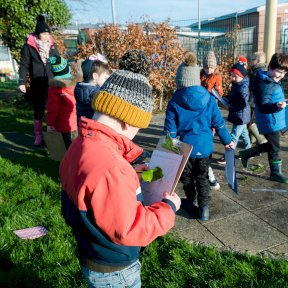
- Opportunities to learn outdoors through the local environment
- Engagement with local experts, museums, sports clubs and community partners
- Thematic projects linking learning across subjects
- Performances, creative arts, enterprise weeks and residential experiences
These experiences inspire curiosity and strengthen learners' sense of belonging-Cynefin-within their community and culture.
UNCRC (United Nation's Convention on the Rights of the Child)/UNCPRD (Convention on the Rights of Persons with Disabilities):
At Neyland Community School we strongly believe in promoting the UNCRC/UNCPRD within the school through our ethos and our cross-curricular links. This is achieved by regular training opportunities and the work of our Rights Respecting Ambassadors that are represented from Year 1 – 6 Our RRS Ambassadors
CWRE (Career and Work Related Education):
We believe that CWRE is fundamental in developing skills for work and life to help our learners understand the relationship between their learning and the world of work. We promote opportunities within the community both in school and off-site to develop CWRE skills. Close work with our locality and Cluster will also promote learning experiences particularly alongside Pembroke Dock Marine Community Development group.

RSE (Relationship and Sex Education):
We embrace and develop RSE within our school as we believe it has a positive and empowering role in our young people's education and plays a vital role in supporting them to realise the four purposes as part of our whole school approach RSE Code This is achieved by consistent teaching approaches through Jigsaw PSHE. We truly believe this is what makes our school unique and ensures a safe environment based on trust and respect for all. This is reflected in our Trauma Informed Schools Accreditation Award.
RVE (Religious Values and Ethics):
RVE is a statutory requirement of the Curriculum for Wales and is mandatory for all learners from ages 3 to 16. There is no parental right to request that a child is withdrawn from RVE in the
Curriculum for Wales. As RVE is a locally determined subject, the agreed syllabus specifies what should be taught in RVE within the local authority and our curriculum will reflect this guidance.
Review and refinement:
Neyland Community Primary School's curriculum provides a coherent, ambitious and inclusive offer for all learners. Through our pilot implementation of PKC Cymru, rooted in the Four Purposes and What Matters Statements, we deliver a curriculum that is:
- Knowledge-rich
- Broad, balanced and engaging
- Evidence-informed
- Grounded in Welsh identity and Cynefin
- Responsive to learners' needs through strong assessment practice
Our aim is clear: to empower every child to thrive now and in the future.
Our school curriculum will be kept under review in order to respond to the outputs of professional inquiry, the changing needs of learners and social contexts and needs. The reviews will take into account the views of stakeholders and will be signed off by the Governing Body. We will publish a summary of our curriculum and revise the summary if changes to the curriculum are made during the review process. This will be located on this web page.
Reviewed annually or when appropriate. Next Review: September 2027